What Your Guests Will Remember Most About Your Wedding (Hint: It’s Not the Centrepieces)
When couples plan a wedding, it’s easy to get caught up in the details. Table linens, chair covers, centrepieces, favours — all of these decisions take time, energy and budget.
They do matter, but often not in the way people expect.
Ask guests about weddings they attended five or ten years ago and very few will remember the exact décor. What they do remember is how the day felt. That’s because weddings aren’t remembered visually — they’re remembered emotionally.
Guests Remember Moments, Not Details
Most guests couldn’t tell you what flowers were on the tables at the last wedding they attended. However, they can usually remember how comfortable they felt, who they spoke to, and whether the day felt relaxed or rushed.
People remember laughing with old friends late into the evening, feeling welcome and included, and having space to talk without shouting over loud music. These emotional memories last far longer than visual ones.
Shared Experiences Create Lasting Memories
What makes a wedding stand out isn’t how polished it looks, but how connected people feel. Shared experiences create shared memories.
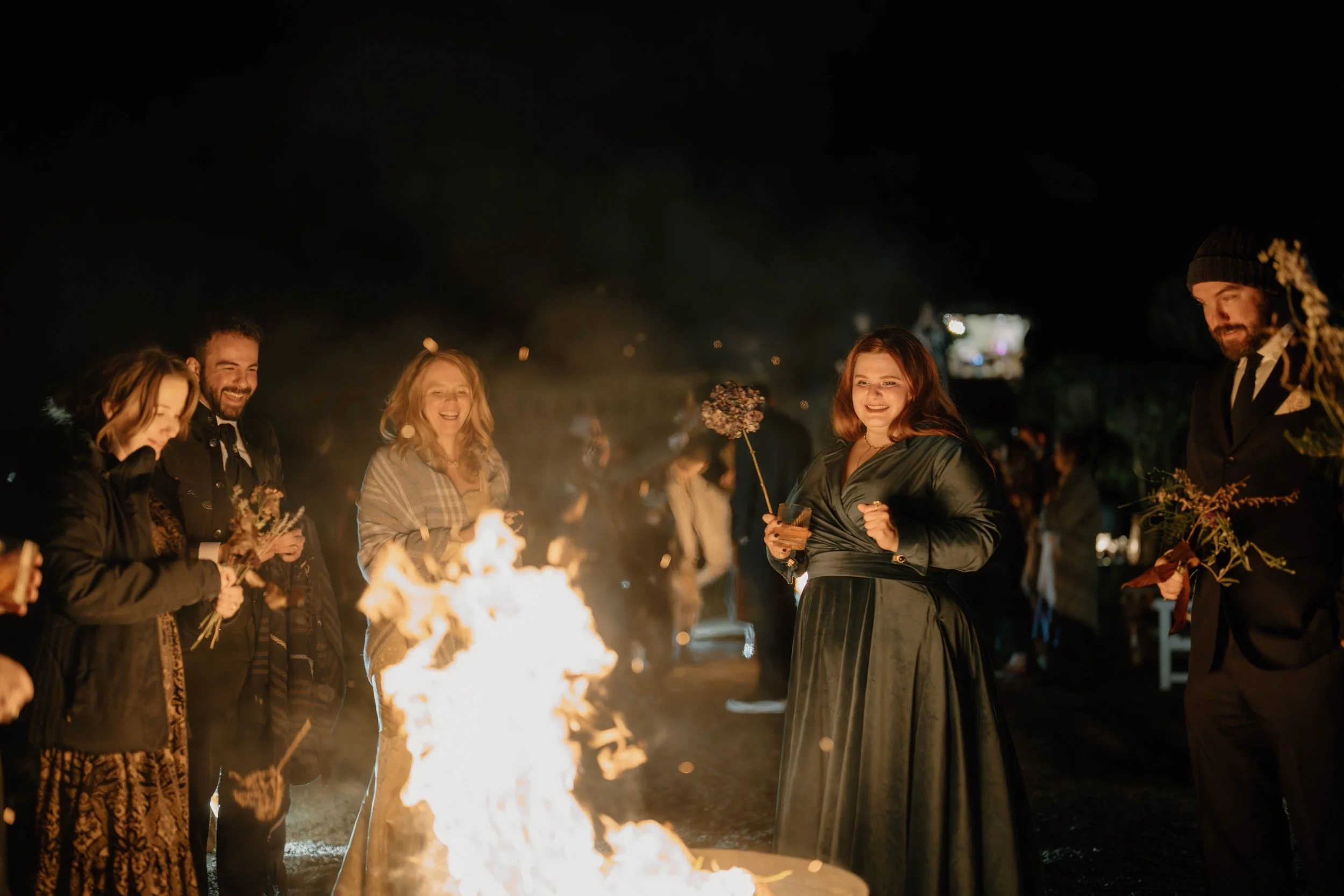
When guests do something together — talking, laughing, warming themselves, telling stories — the wedding becomes something they participated in rather than simply observed. This is why informal moments often outshine formal ones, and why quieter spaces can be just as important as the dancefloor.
Why Atmosphere Matters More Than Aesthetics
Atmosphere is subtle but powerful. It’s shaped by light, warmth, sound, space, and how comfortable people feel being themselves.
A beautifully styled room can still feel flat if guests feel rushed or disconnected. By contrast, a simple space designed with feeling in mind can be deeply memorable. Weddings that prioritise atmosphere give guests permission to relax — and relaxed guests make better memories.
The Moments People Talk About Afterwards
When couples look back on their wedding, it’s rarely the styling they talk about first. Instead, it’s the unexpected, human moments.
Things like everyone drifting outside for hours of conversation, different generations chatting together, or the evening feeling calm and unforced rather than tightly scheduled. These moments don’t happen by accident — they happen when space is intentionally designed for connection.
Designing for Connection, Not Over-Programming
One of the most common mistakes couples make is over-programming the evening. When every minute is planned, guests have little room to simply be present.
Creating areas where people can gather naturally, step away from noise, have real conversations, and feel warm and comfortable can be just as important as entertainment. Features such as outdoor gathering spaces, soft lighting, and firelight act as social anchors rather than decorations.
Why the Evening Is What Guests Remember
The ceremony is meaningful and the meal is enjoyed, but the evening is where memories are truly made. This is when people loosen up, conversations deepen, and the day becomes more personal.
Weddings that allow the evening to unfold naturally — rather than forcing it — are the ones guests talk about for years.
What This Means for Your Wedding
When deciding where to spend your time, energy or budget, it helps to ask a simple question:
Will this help people connect?
If the answer is yes, it’s likely to be remembered. If it’s purely visual, it may be beautiful, but it may also fade quickly from memory.
A Wedding Is Remembered for How It Felt
Long after the flowers have wilted and the tables have been cleared, what remains is memory. The warmth, the conversations, the laughter, and the moments when time seemed to slow.
Those are the experiences your guests will carry with them — and those are the things worth designing for.
If you’re planning a wedding and want to create an atmosphere guests genuinely remember, think beyond décor and focus on experiences that bring people together.